|
The basement to be converted was in a two-story Victorian double-fronted property, built circa 1860. The basement consisted of two basement rooms and a wide hall. The owner wished to use this space to create a playroom, a guest bedroom, and a wet room.
The Basement Conversion
The first step was to excavate the floor down as low as the foundations would allow in order to maximize the available headroom in the basement. Because the foundations were slightly deeper in one room than the other, it was decided to step the floor levels. A new concrete floor-slab was then laid throughout the basement.
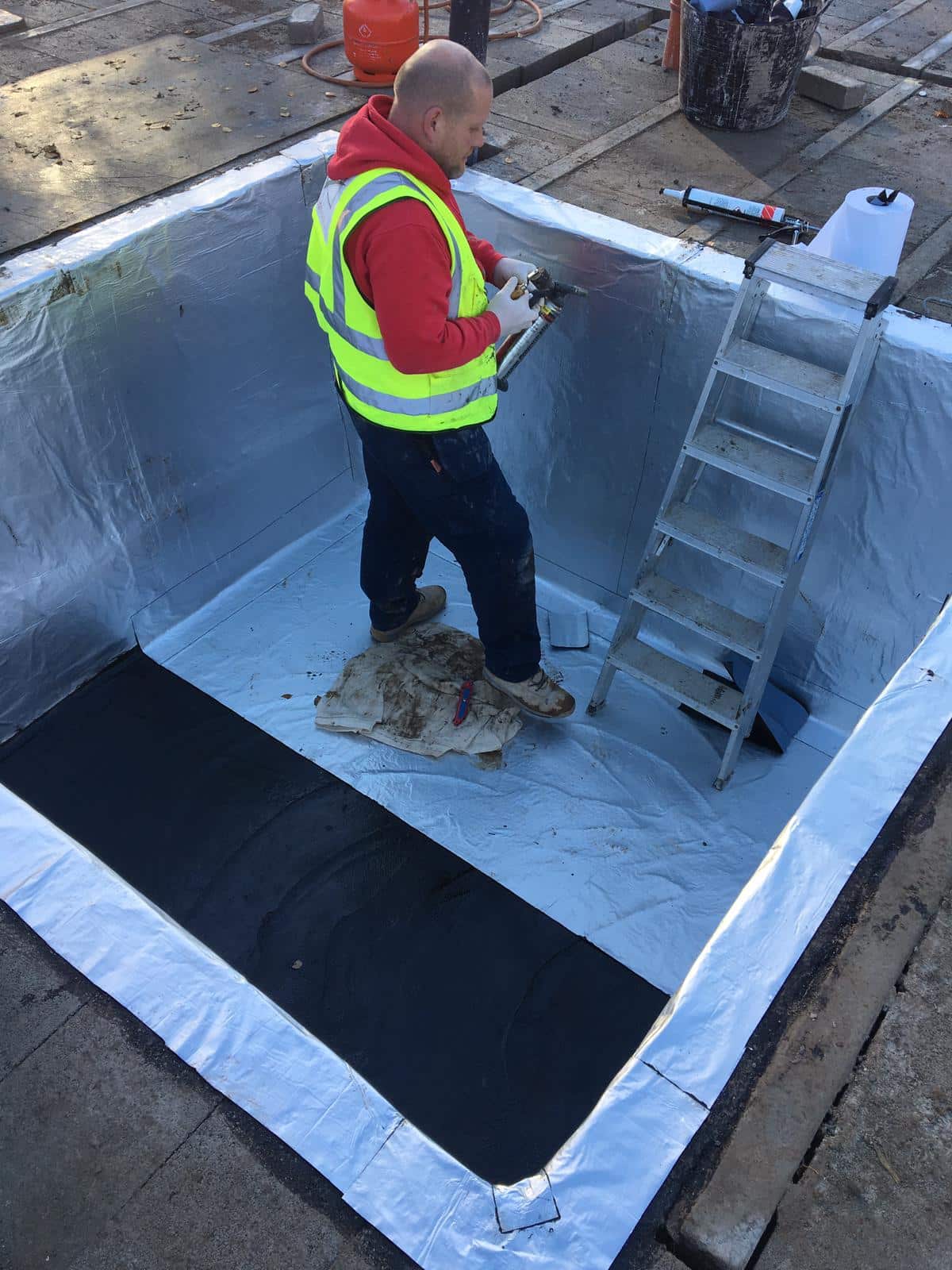
Waterproofing of the basement was carried out using the Oldroyd Xv Clear cavity drainage membrane system . This system was chosen over a cementitious or epoxy-based system, as it redirects any water entering the basement to a sump, rather than physically holding back the water pressure. This means that the system does not rely on the integrity of the soft, Victorian brickwork for it success. It also allowed the contract to be completed more quickly, as there was no need to sand-blast the walls in order to provide a key. An Aquadrain channel was laid around the perimeter of the basement at the floor-wall junction, leading to a sump and pump . This provides additional drainage at what is usually considered to be the area most susceptible to water-ingress in basements. The Oldroyd Xv membrane was then applied to the basement walls and floors. Special self-sealing "Oldroyd brick plugs" were used to fix the membrane to the walls of the basement, whilst on the floor no fixings were required. Holes in the back of the brick-plugs, designed to accept No.12 screws, allowed battens to be fixed over the membrane. Plasterboard was then fixed to the battens.
New ceilings, lighting, sockets and plumbing were installed, as well as a humidistat-controlled extractor fan. This fan is intended to increase ventilation in the basement and ensure that the levels of relative humidity do not rise above those recommended for a Category III basement in BS8102.
|
 |
 |
| Before |
After |
|
|
Bedroom |
 |
 |
| Before |
After |
|
|
Wetroom |
 |
 |
| Before |
After |
|
|
The Result
The clients were very happy with the system and have since recommended us to friends.
Cellar conversion project with lightwell at a mid-terraced house in Lytham St Annes, UK .
Background
The property in question is a 7-bedroom, mid-terraced property close to the centre of Lytham St Annes in Lancashire . The damp, musty cellar was virtually unused except for storage. The owners wanted to use the cellar to create an additonal living-space accessible from the ground floor. The main requirement was for an adults "chill-out" room with an adjacent wet room and sauna.
The Cellar Conversion (Interior Works)
The cellar conversion project was carried out following a recommendation from the owners of another successful cellar conversion project in Lytham.
The floor of the cellar was damp and uneven. It was therefore excavated to provide a level base with additional material removed to increase head-height. A new floor slab was then laid incorporating Aquadrain drainage channel around its perimeter, leading to a sump and pump .
Oldroyd Xv Clear cavity drainage membrane was fixed to the cellar walls using special Oldroyd fixing plugs. The same membrane was also laid across the cellar floor, ensuring an overlap with the membrane already fixed to the walls.
A screed was then poured onto the Oldroyd Xv membrane on the floor. Wiring and plumbing were then installed before being covered by plasterboard attached to the Oldroyd fixing plugs on the walls.
Interior Design
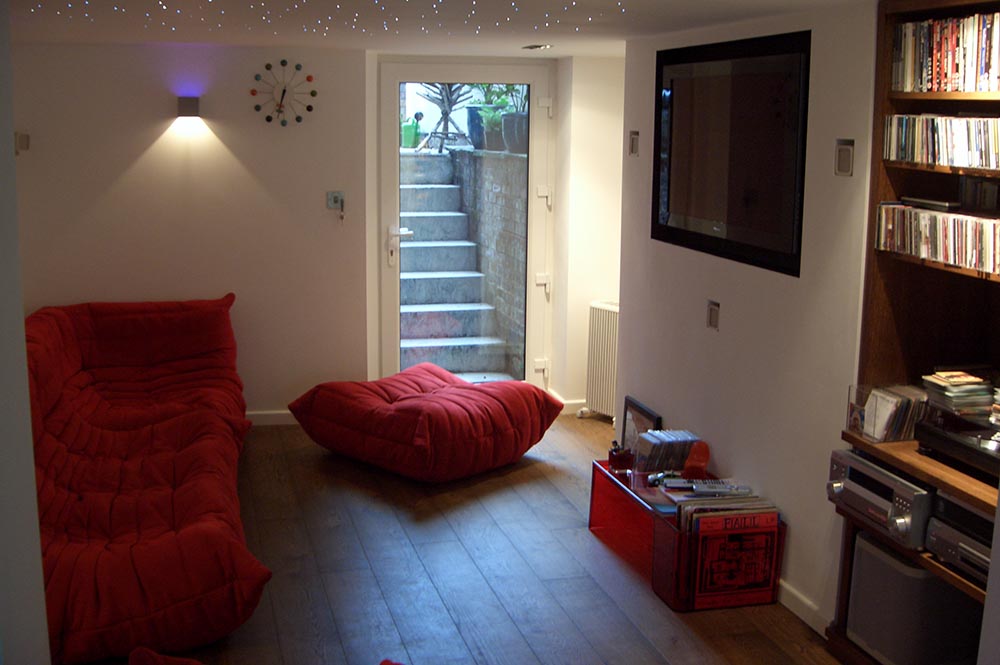
Having provided a dry cellar, further works were carried out to provide a usable cellar space to the client's specification. The heart of the new space, is a home cinema with flush-mounted plasma screen and surround sound system. The understairs area houses a bespoke sauna that was hand-built on site. The wet room incorporates a drain set into the newly tiled floor and a WC with macerator.
The Cellar Conversion (Exterior Works)
To provide additional light and direct access from the outside of the building, the existing wooden door leading to the cellar was replaced with a glass door. On the other side of the building, earth below a small cellar window was excavated and a wall "knocked-through" to provide a lightwell / second entrance.
|
 |
 |
| Before |
After |
|
|
Outside |
 |
 |
| Before |
After |
|
|
Stairs/Sauna |
 |
 |
| Before |
After |
|
|
|
Finished Wet Room |
 |
|
Basement Conversion at a seafront hotel in Blackpool, Lancashire
Background
A 17-bedroom hotel located adjacent to the promenade had an unused basement extending under the entire footprint of the building. The basement was damp, smelly, and virtually unusable despite a previous attempt to "dry line" the walls. It is likely that the basement area was originally used as a bakery as an oven was uncovered during the conversion works which extended under the hotel car park.
The hotelier wanted to make use of the basement space to provide an additional dining area, provide a new location for the hotel bar, and provide two private bedrooms.
The Basement Conversion
The initial work involved clearing the site of existing hardboard and timber battens which had been used to hide underlying damp problems. The project was carried out in stages to enable the owners to use parts of the basement while the conversion was in progress.
Waterproofing was achived using the Oldroyd Xv Clear cavity drainage system. An Aquadrain perimeter drainage channel leading to a sump chamber and pump was first installed around the perimeter of the basement to provide additional drainage capacity at the wall-floor junction. Oldroyd Xv membrane was then fixed to the walls using special self-sealing fixing plugs. Joins between sheets of membrane were sealed using special sealing tape. Oldroyd Xv membrane was then laid across the floor ensuring an overlap with the membrane already fixed to the walls. This system was chosen for a number of reasons:
- No wet trades involved - allowing basement to remain in use while works in progress.
- Allows waterproofing to be carried out in stages - allowing areas of the basement to continue to be used during the conversion.
- Suitable for application directly onto brick walls with no surface preparation
After the Oldroyd Xv membrane had been installed, wooden battens were screwed into the fixing plugs used to secure the membrane to the wall. Plasterboard was then fixed to these battens, providing a smooth finish for decorating. The gap between the plasterboard and the membrane allowed electrical and plumbing services to be hidden.
The Finished Basement
The relocation of the hotel bar to the basement provided a huge increase in dining capacity and an improvement in bar facilities .
|
 |
 |
| Before |
After |
|
|
Basement |
 |
 |
| Before |
After |
|
|
|
|